Emergency Treatment for Right MCA Stroke: Acting Fast to Save Brain Function
Aug 18
2 min read
Introduction:( www.youtube.com/kneetiegorungo.) (https://kneetie.in)
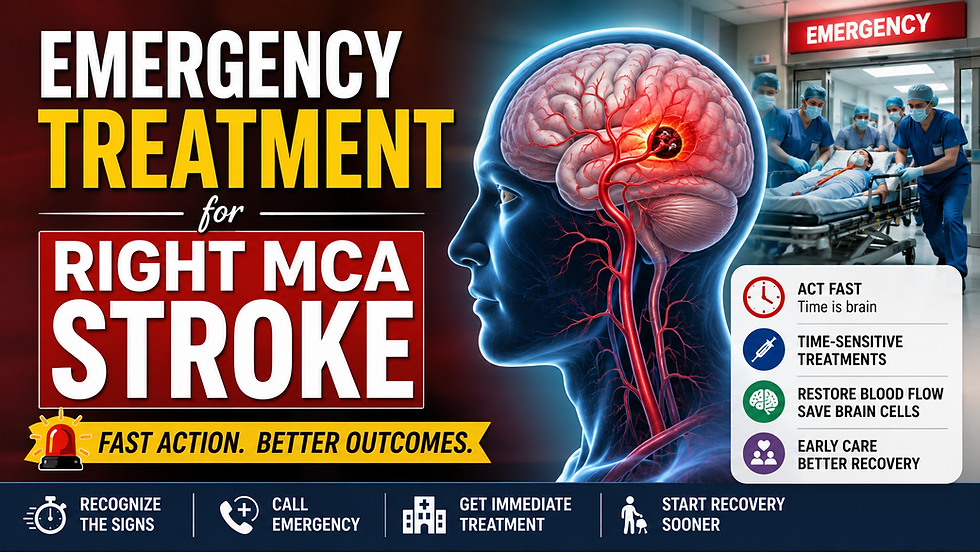
A right Middle Cerebral Artery (MCA) stroke is a medical emergency that can occur when blood flow through the right MCA is blocked, usually by a blood clot. Because brain cells can be injured rapidly when they are deprived of oxygen, immediate emergency evaluation and treatment are essential. Sudden weakness or numbness on the left side, facial drooping, confusion, vision problems, difficulty understanding language, dizziness, or loss of coordination may indicate a stroke. Anyone experiencing sudden stroke symptoms should receive emergency medical attention immediately and should not attempt to drive themselves to the hospital.
Recognizing the Emergency:
The first step is recognizing stroke symptoms and calling 911 without delay. Medical teams need to know when the patient was last known to be well because treatment decisions depend heavily on timing. Emergency personnel can begin assessment during transport and alert the appropriate stroke center before arrival.
Emergency Brain Imaging:
At the hospital, doctors quickly determine whether the stroke is caused by a blocked artery or bleeding. CT or MRI brain imaging, often combined with vascular imaging such as CT angiography, helps identify the location of the blockage and whether the patient may benefit from urgent reperfusion treatment. This distinction is critical because clot-dissolving medications can be harmful in hemorrhagic stroke.
Intravenous Thrombolysis:
For eligible patients with acute ischemic stroke, intravenous thrombolysis may restore blood flow by breaking down the clot. The 2026 American Heart Association/American Stroke Association guideline recommends rapid treatment with either alteplase or tenecteplase for eligible adults within the standard 4.5-hour treatment window. Selected patients may also qualify under extended-window criteria based on advanced imaging.
Mechanical Thrombectomy:
A major right MCA blockage may require mechanical thrombectomy. During this minimally invasive procedure, specialists guide a catheter through an artery to the blocked brain vessel and remove the clot using specialized devices. For selected patients with anterior-circulation large-vessel occlusion, thrombectomy can substantially improve functional outcomes and reduce disability. Current guidelines support treatment in appropriate patients within early and, for selected individuals, extended time windows.
Supportive Emergency Care:
Alongside clot treatment, medical teams carefully manage breathing, oxygenation, blood pressure, blood glucose, temperature, swallowing safety, and other complications. Continuous neurological monitoring helps doctors detect worsening symptoms and determine whether additional intervention is necessary.
Conclusion:
Emergency treatment for a right MCA stroke depends on speed, accurate diagnosis, and rapid restoration of brain blood flow when appropriate. Calling 911 immediately, reaching a capable stroke center, obtaining urgent brain imaging, and providing eligible patients with thrombolysis or thrombectomy can help protect brain tissue and improve recovery chances. Never wait for symptoms to disappear—every minute matters in stroke care.
(The domain www.dubaitelemedicine.com is for sale. Please contact us at www.kneetie.com#KneeTie #Stroke #youtube/kneetiegorungo #DubaiTelemedicine)


Comments