Recovery Timeline for Right MCA Stroke:
17 minutes ago
2 min read
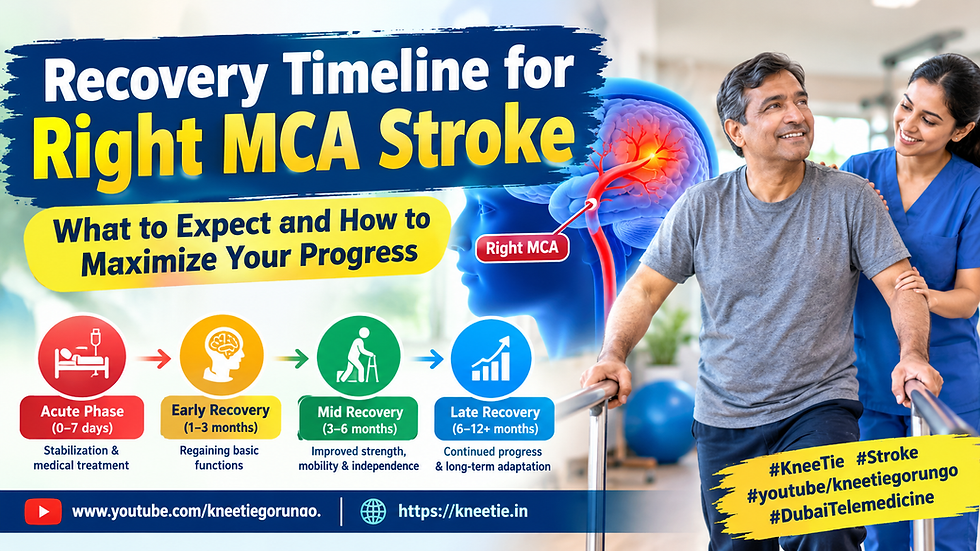
Introduction:Recovery after a right middle cerebral artery (MCA) stroke is a gradual process that can vary greatly from one person to another. The extent of brain injury, overall health, treatment received, and participation in rehabilitation can all influence recovery. Some survivors improve quickly during the first few weeks, while others continue making progress for months or even years. Rehabilitation is an important part of regaining independence and improving daily function. www.youtube.com/kneetiegorungo. https://kneetie.in
First 24–72 Hours – Emergency and Stabilization:The first stage focuses on emergency treatment, stabilizing the patient, protecting the brain, and preventing complications. Doctors assess the stroke's severity and determine appropriate treatments. Once medically stable, rehabilitation may begin early, sometimes within the first day or two. Physical, occupational, and speech-language therapists may assess movement, balance, communication, swallowing, and daily activities.
First Week – Early Rehabilitation:During the first week, the main goals are medical stabilization and beginning safe rehabilitation. Patients may start practicing sitting, standing, transferring, walking, using the affected arm, and performing basic self-care. Therapy is adjusted according to the person's strength, alertness, and medical condition.
Weeks 1–12 – Early Recovery:The first three months are often a period of significant recovery. Improvements may occur in strength, balance, mobility, coordination, thinking, vision, and daily activities. Consistent rehabilitation can help the brain relearn skills and develop strategies to compensate for abilities that remain affected. However, recovery speed differs considerably between individuals.
Three to Six Months – Continued Progress:After the first few months, improvement may become slower, but recovery does not necessarily stop. Patients may continue working on walking, arm and hand function, balance, communication, cognition, and independence. Outpatient therapy, home exercises, and regular practice can remain valuable.
Six Months and Beyond – Long-Term Recovery:Stroke recovery has no fixed endpoint. Some people continue improving for years after a stroke, particularly when they remain active and continue appropriate rehabilitation. Long-term goals may include returning to hobbies, improving independence, adapting the home environment, and safely participating in family, social, and community activities.
Factors That Affect Recovery:Recovery depends on the size and location of the brain injury, stroke severity, speed of treatment, age, other health conditions, and access to rehabilitation. Emotional well-being, family support, and consistent participation in therapy can also influence the recovery journey. Because every right MCA stroke is different, a personalized rehabilitation plan is essential.
Conclusion:A right MCA stroke recovery timeline cannot be predicted precisely for every individual. The greatest gains often occur during the early months, but meaningful improvements can continue much longer. Starting rehabilitation when medically appropriate, practicing skills consistently, following medical advice, and maintaining healthy lifestyle habits can support long-term recovery. Regular follow-up with the healthcare team helps adjust treatment as abilities and goals change.
The domain www.dubaitelemedicine.com is for sale. Please contact us at www.kneetie.com#KneeTie #Stroke #youtube/kneetiegorungo #DubaiTelemedicin


Comments