Caregiver’s Guide to Supporting a Right MCA Stroke Survivor
11 minutes ago
2 min read
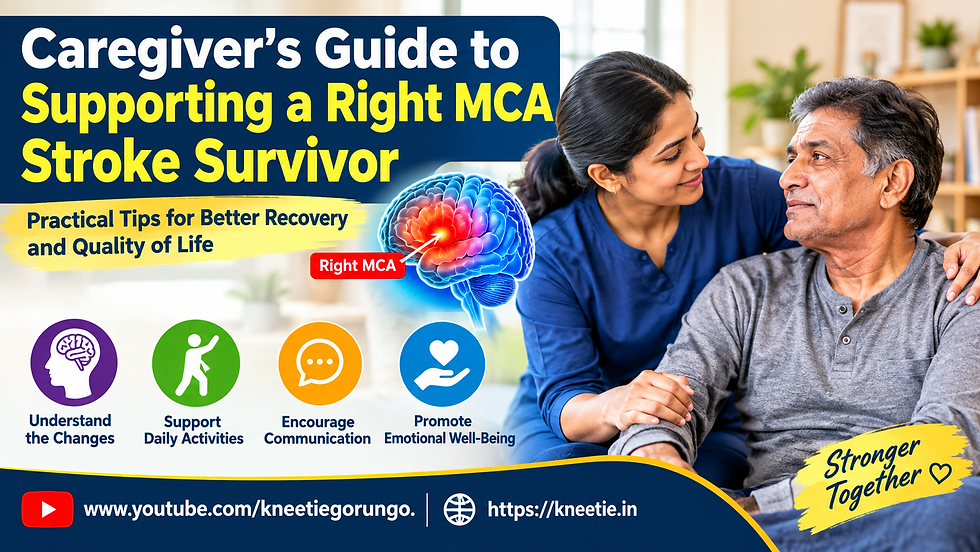
A right middle cerebral artery (MCA) stroke can affect movement, vision, attention, awareness, and emotional well-being. Survivors may experience weakness on the left side of the body, difficulty maintaining balance, or changes in judgment and behavior. Caregivers play an essential role in recovery by providing practical assistance, emotional support, and a safe environment. Understanding the survivor’s needs can help families promote independence, confidence, and quality of life.
1. Understand the Effects of a Right MCA Stroke:
A right MCA stroke may cause left-sided weakness or paralysis, reduced awareness of the left side, visual difficulties, and problems with spatial perception. Some survivors may not recognize their own limitations, a condition called anosognosia. Learning about these changes helps caregivers respond with patience rather than frustration. Every survivor is different, so follow the advice of the healthcare team.
2. Create a Safe Home Environment:
Safety is a priority during stroke recovery. Remove loose rugs, keep walkways clear, improve lighting, and install grab bars where needed. Place essential items within easy reach and follow professional recommendations for mobility aids. Because some survivors may overlook objects on their left side, caregivers can encourage them to scan their surroundings with guidance from an occupational therapist.
3. Support Daily Activities and Rehabilitation:
Encourage the survivor to participate in dressing, bathing, eating, and other daily activities as safely as possible. Allow enough time and avoid doing everything for them when they can manage part of a task independently. Follow the prescribed physical, occupational, and speech therapy programs. Never attempt unsafe transfers or exercises without proper training.
4. Communicate with Patience and Respect:
Speak clearly, use simple instructions when needed, and allow time for responses. Reduce distractions during conversations and avoid arguing if the survivor has difficulty recognizing their limitations. Offer gentle reminders and encouragement. Involve the survivor in decisions about their daily routine to preserve dignity and independence.
5. Provide Emotional Support:
Stroke recovery can bring frustration, anxiety, sadness, and changes in self-confidence. Listen without judgment, celebrate small achievements, and encourage enjoyable social activities when appropriate. Persistent sadness, withdrawal, or unusual behavioral changes should be discussed with a healthcare professional.
6. Care for Yourself as a Caregiver:
Caregiving can be physically and emotionally demanding. Share responsibilities with family members, take regular breaks, and seek respite services or caregiver support groups. Maintain your own sleep, nutrition, and health appointments. Asking for help is a responsible step, not a failure.
Conclusion:
Supporting a right MCA stroke survivor requires patience, understanding, consistency, and teamwork. By creating a safe environment, encouraging rehabilitation, respecting independence, and caring for their own well-being, caregivers can make recovery more manageable. Progress may be gradual, but every meaningful improvement deserves recognition. Work closely with healthcare professionals to adapt care as the survivor’s needs change.
The domain www.dubaitelemedicine.com is for sale. Please contact us at www.kneetie.com
#KneeTie #Stroke #youtube/kneetiegorungo #DubaiTelemedicine


Comments