Why Many Patients Feel Peaceful Around Cows: Psychology + Physiology Explained
Dec 23, 2025
2 min read
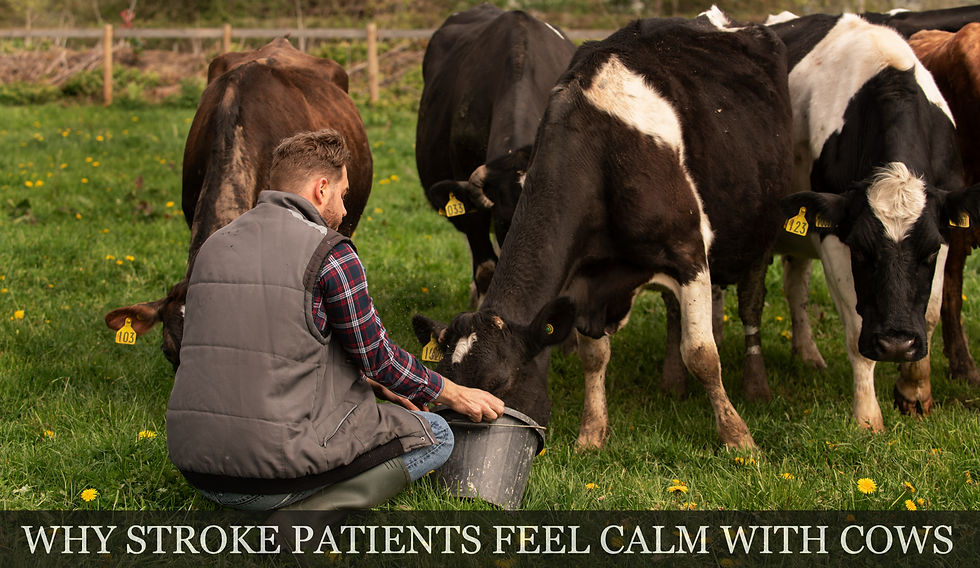
Introduction: ( www.youtube.com/kneetiegorungo.)
Across cultures and centuries, humans have felt a unique sense of calm in the presence of animals. Among them, cows stand out as particularly soothing. Many patients—especially those dealing with stress, neurological conditions, trauma, or recovery from illness—report feeling unusually peaceful around cows. This is not superstition or sentimentality alone. Modern psychology and physiology increasingly explain why cows can have a measurable calming effect on the human nervous system.
The Psychology of Gentleness and Safety: Cows are slow-moving, non-predatory animals with predictable behavior. From a psychological standpoint, the human brain constantly scans the environment for threats. Fast movements, sharp sounds, and unpredictable actions activate the brain’s fear circuitry. Cows, by contrast, communicate safety. Their large eyes, steady breathing, and unhurried pace subconsciously signal to the brain that there is no immediate danger. This lowers hypervigilance, especially in patients with anxiety, PTSD, stroke recovery, or sensory overload.
Biophilia and the Human-Animal Bond: The biophilia hypothesis suggests humans are biologically wired to feel connected to nature and living beings. Cows, often associated with farms, open fields, and childhood memories, activate positive emotional associations. For patients, this can trigger feelings of belonging, simplicity, and grounding. Unlike pets that may demand attention or energy, cows coexist quietly, allowing patients to relax without performance or expectation.
Physiological Nervous System Regulation: From a physiological perspective, being around cows can activate the parasympathetic nervous system—the body’s “rest and digest” mode. Studies on animal-assisted environments show reductions in heart rate, blood pressure, and cortisol (the stress hormone). The rhythmic sounds of cows chewing, breathing, or softly vocalizing provide a natural form of sensory regulation, similar to white noise or meditation chants. This is particularly helpful for stroke survivors, aphasia patients, and individuals with ADHD, where nervous system dysregulation is common.
Grounding, Touch, and Sensory Feedback:Touch plays a major role in healing. The warmth of a cow’s body, the texture of its skin, and the gentle resistance when touched provide deep sensory input. This kind of input helps ground patients in their bodies, improving body awareness and emotional stability. For neurological patients, such sensory feedback can support neural rewiring and calm overstimulated pathways.
Cows as Non-Judgmental Companions:Unlike humans, cows do not judge, interrupt, or demand verbal communication. For patients with speech difficulties, depression, or cognitive impairment, this absence of pressure creates emotional safety. Simply “being” with a cow is enough. That acceptance itself is therapeutic.
Conclusion:The peace patients feel around cows is not accidental—it is a powerful blend of psychology, physiology, sensory regulation, and emotional safety. As healthcare increasingly embraces holistic healing, cows and farm-based environments offer a quiet, profound form of therapy that modern medicine is only beginning to understand.
(The domain www.dubaitelemedicine.com is for sale. Please contact us at www.kneetie.com#KneeTie #Stroke #youtube/kneetiegorungo #DubaiTelemedicine)


Comments