How Fast Should Right MCA Stroke Be Treated?
9 minutes ago
2 min read
Introduction: www.youtube.com/kneetiegorungo | https://kneetie.in
A right middle cerebral artery (MCA) stroke is a serious medical emergency that requires immediate treatment. The middle cerebral artery supplies blood to important brain regions responsible for movement, sensation, vision, and spatial awareness. When a blood clot blocks this artery, brain cells begin to suffer damage due to a lack of oxygen. Rapid diagnosis and treatment can reduce brain injury, improve recovery prospects, and potentially save lives.
Why Is Immediate Treatment Important:
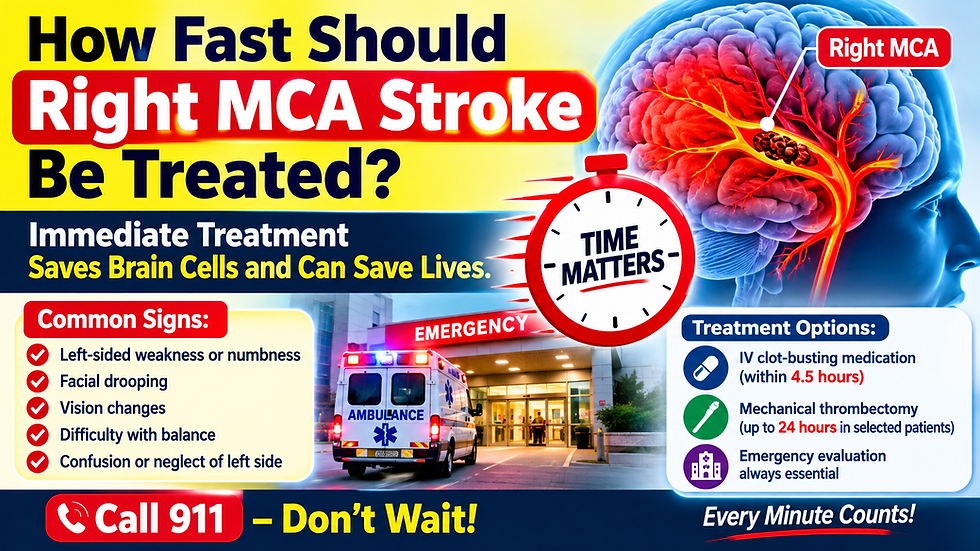
During a stroke, millions of brain cells can be damaged as blood flow is interrupted. A right MCA stroke commonly causes weakness or paralysis on the left side of the body, facial drooping, visual difficulties, and problems recognizing or attending to the left side of the environment. Some patients may also experience confusion or impaired judgment.
The sooner blood flow is restored when appropriate, the greater the opportunity to preserve brain tissue. Therefore, recognizing symptoms and contacting emergency services immediately is essential.
The First Few Hours Matter:
Patients with suspected stroke should be evaluated in an emergency department without delay. Doctors assess symptoms, determine when the patient was last known to be well, and perform brain imaging, usually a CT scan or MRI, to identify the type of stroke and guide treatment.
Eligible patients with an ischemic stroke may receive intravenous clot-busting medication, such as alteplase or tenecteplase, generally within 4.5 hours of symptom onset or the last-known-well time. Selected patients may qualify for treatment beyond this window following specialized imaging and medical assessment.
Mechanical Thrombectomy for Right MCA Stroke:
When a large blood vessel is blocked by a clot, mechanical thrombectomy may be recommended. This procedure involves inserting a catheter into the blood vessels and removing the clot to restore circulation.
For carefully selected patients, thrombectomy may be beneficial up to 24 hours after they were last known to be well. Eligibility depends on the location of the blockage, brain imaging, the extent of existing injury, and other clinical factors. Not every patient is eligible, making rapid specialist assessment essential.
What Should Families Do?
If someone develops sudden facial drooping, left-sided weakness, speech difficulties, vision changes, or confusion, call 911 immediately in the United States. Do not wait for symptoms to disappear or attempt to drive the patient yourself.
Record the time symptoms began or when the person was last known to be well. Do not give food, drinks, aspirin, or other medication unless instructed by medical professionals, because the stroke type and swallowing safety must first be assessed.
Conclusion:
A right MCA stroke must be treated as an emergency. Immediate medical assessment, appropriate brain imaging, and timely treatment can reduce disability and improve the chances of recovery. Even if symptoms begin improving, emergency evaluation remains necessary. Remember: every minute matters when the brain is deprived of blood flow.
The domain www.dubaitelemedicine.com is for sale. Please contact us at www.kneetie.com #KneeTie #Stroke #youtube/kneetiegorungo #DubaiTelemedicine


Comments