Neurofeedback in Stroke Recovery: Harnessing the Brain’s Plasticity
Apr 15
2 min read
Introduction: ( www.youtube.com/kneetiegorungo.)( https://kneetie.in )
Stroke remains one of the leading causes of long-term disability worldwide, often leaving survivors with impairments in movement, speech, and cognition. Traditional rehabilitation focuses on physical therapy, speech therapy, and occupational therapy. However, an emerging technique—neurofeedback—is gaining attention for its ability to directly engage the brain in the healing process. By leveraging the brain’s natural plasticity, neurofeedback offers a promising, non-invasive pathway to enhance stroke recovery.
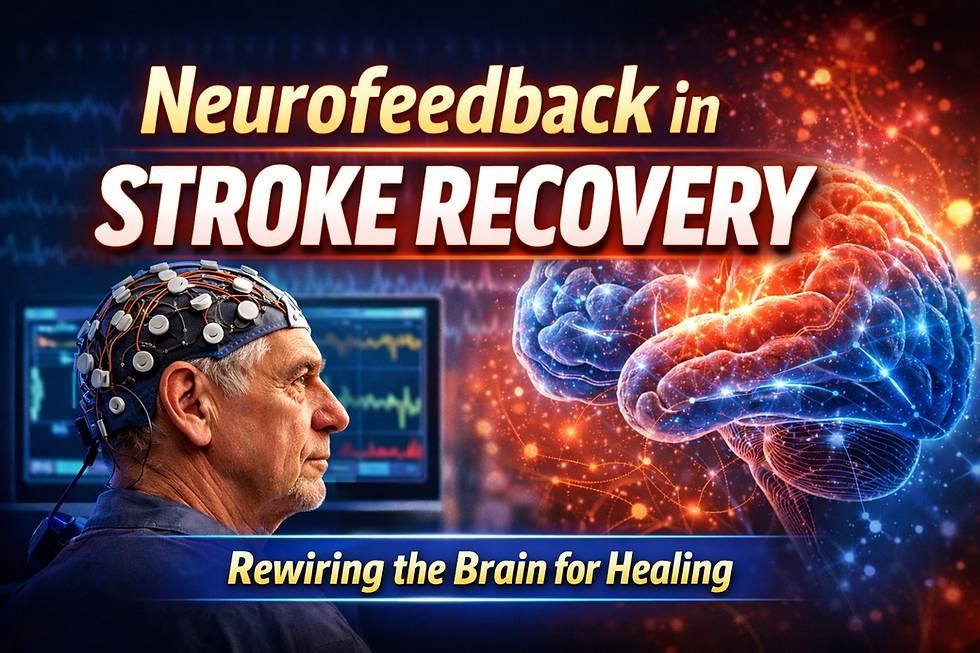
Understanding Neurofeedback:Neurofeedback, also known as EEG biofeedback, is a technique that monitors brainwave activity in real time and provides feedback to the patient. Sensors placed on the scalp detect electrical signals, which are then displayed through visual or auditory cues. Patients learn to regulate their brain activity by responding to this feedback. Over time, this training helps normalize abnormal brainwave patterns that may have resulted from a stroke.
The Role of Neuroplasticity:The brain has a remarkable ability to reorganize itself after injury—a concept known as neuroplasticity. Neurofeedback taps into this ability by encouraging the brain to form new neural connections. For stroke survivors, this means that undamaged areas of the brain can gradually take over functions previously managed by damaged regions. Consistent neurofeedback sessions can accelerate this rewiring process, leading to improved motor skills, speech, and cognitive function.
Applications in Stroke Rehabilitation:Neurofeedback is being used to address a variety of post-stroke challenges. For motor recovery, it helps patients regain control over affected limbs by enhancing brain signals linked to movement. In cases of aphasia, neurofeedback can support language recovery by stimulating relevant brain regions. It also shows promise in improving attention, memory, and emotional regulation—areas often impacted after a stroke.
Benefits and Limitations:One of the major advantages of neurofeedback is that it is non-invasive and drug-free, making it suitable for long-term use. It empowers patients to take an active role in their recovery. However, it is not a standalone cure. Neurofeedback works best when integrated with conventional rehabilitation therapies. Additionally, access to specialized equipment and trained professionals can be a limiting factor in some regions.
Future Directions:Advancements in artificial intelligence and portable EEG devices are making neurofeedback more accessible and effective. Personalized neurofeedback protocols tailored to individual brain patterns are expected to further enhance outcomes. As research continues, neurofeedback may become a standard component of stroke rehabilitation programs worldwide.
Conclusion:Neurofeedback represents a powerful tool in stroke recovery, offering hope to millions of survivors seeking to regain independence and quality of life. By directly engaging the brain’s healing mechanisms, it complements traditional therapies and accelerates recovery. While challenges remain, the integration of neurofeedback into mainstream rehabilitation marks a significant step forward in neuroscience and patient care
(The domain www.dubaitelemedicine.com is for sale. Please contact us at www.kneetie.com#KneeTie #Stroke #youtube/kneetiegorungo #DubaiTelemedicine)


Comments