Vision Therapy After Stroke
Apr 17
2 min read
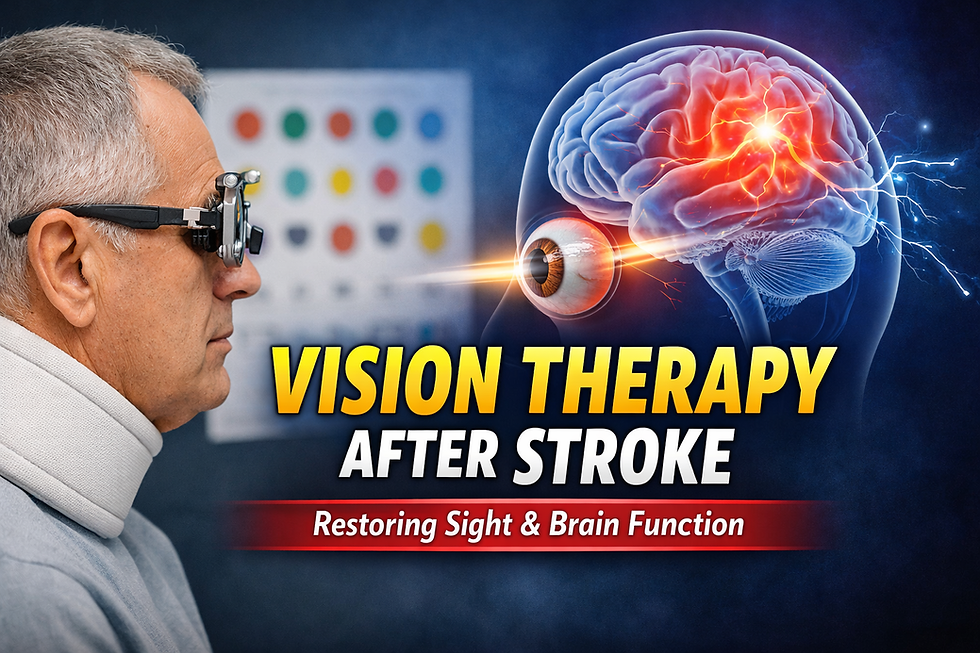
Introduction: www.youtube.com/kneetiegorungo.A stroke can affect much more than movement or speech—it often disrupts vision in ways that deeply impact daily life. Many stroke survivors experience issues such as blurred vision, double vision, loss of visual fields, or difficulty focusing and tracking objects. These challenges can make simple tasks like reading, walking, or recognizing faces extremely difficult. Vision therapy after stroke offers a structured, non-invasive approach to retrain the brain and improve visual function. It focuses not only on the eyes but also on how the brain processes visual information, which is often where the real disruption lies.
Understanding Post-Stroke Visual Problems:After a stroke, the communication between the eyes and the brain may be impaired. Conditions like hemianopia (loss of half the visual field), diplopia (double vision), and visual neglect (ignoring one side of space) are common. These are not always due to damage in the eyes themselves but rather in the brain’s visual pathways. Recognizing these issues early is essential, as untreated visual problems can hinder overall rehabilitation and independence.
What Is Vision Therapy?:Vision therapy is a personalized rehabilitation program designed to improve visual skills and processing. It involves a series of exercises and activities that help retrain the brain to interpret visual signals correctly. These exercises may include eye tracking, focusing drills, coordination tasks, and spatial awareness training. Therapy is typically guided by optometrists or neuro-rehabilitation specialists and can be conducted both in clinics and at home.
Benefits of Vision Therapy After Stroke:Vision therapy can significantly enhance a stroke survivor’s quality of life. Improvements may include better reading ability, increased balance and coordination, reduced dizziness, and enhanced ability to navigate environments safely. Importantly, it also boosts confidence and independence, allowing individuals to regain control over their daily activities. While recovery varies from person to person, consistent therapy often leads to measurable progress.
Integrating Vision Therapy into Stroke Recovery:For best results, vision therapy should be integrated with other rehabilitation efforts such as physical therapy, occupational therapy, and speech therapy. A multidisciplinary approach ensures that all aspects of recovery are addressed holistically. Family involvement is also crucial, as encouragement and support can motivate the patient to stay consistent with therapy routines.
Conclusion: Vision therapy after stroke is a powerful tool that taps into the brain’s ability to adapt and heal. By addressing visual processing challenges, it plays a vital role in comprehensive stroke recovery. Early intervention, personalized programs, and consistent practice can lead to meaningful improvements, helping survivors reclaim independence and improve their overall quality of life.
(The domain www.dubaitelemedicine.com is for sale. Please contact us at www.kneetie.com#KneeTie #Stroke #youtube/kneetiegorungo #DubaiTelemedicine)


Comments